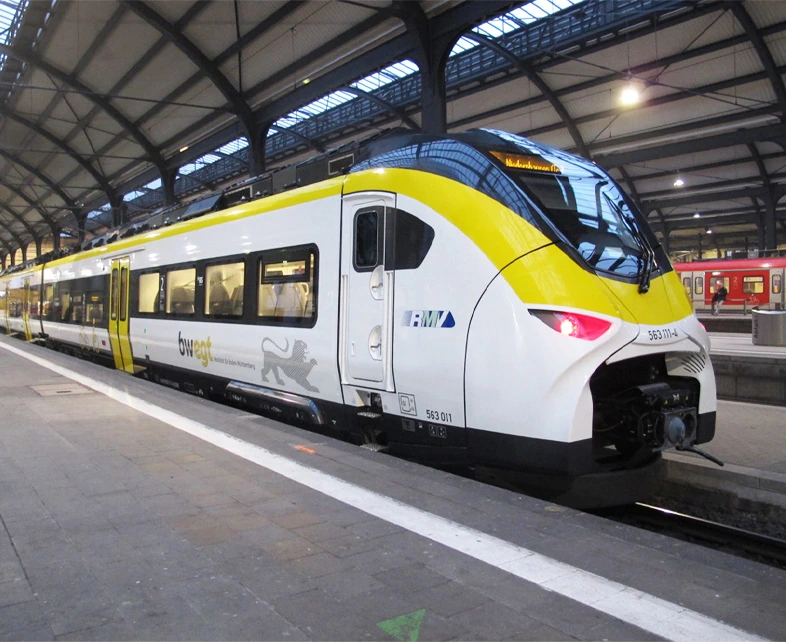
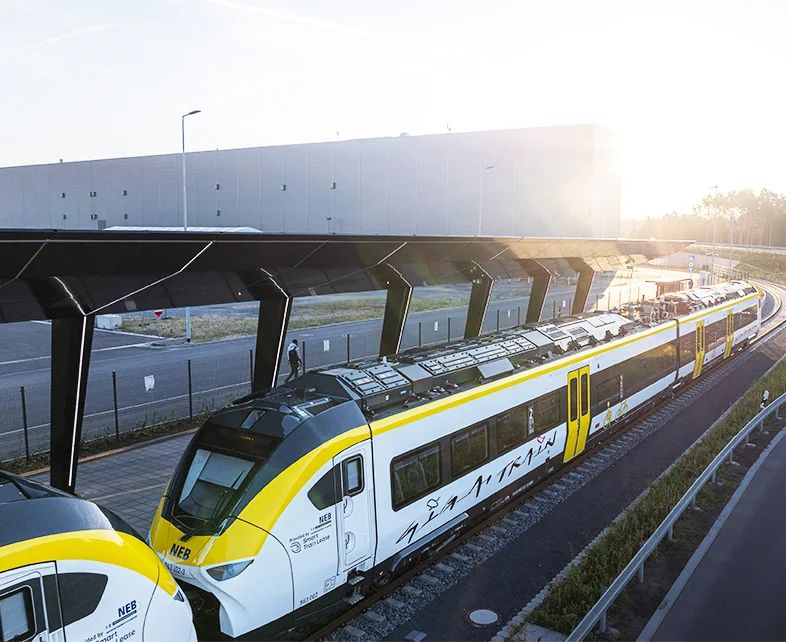
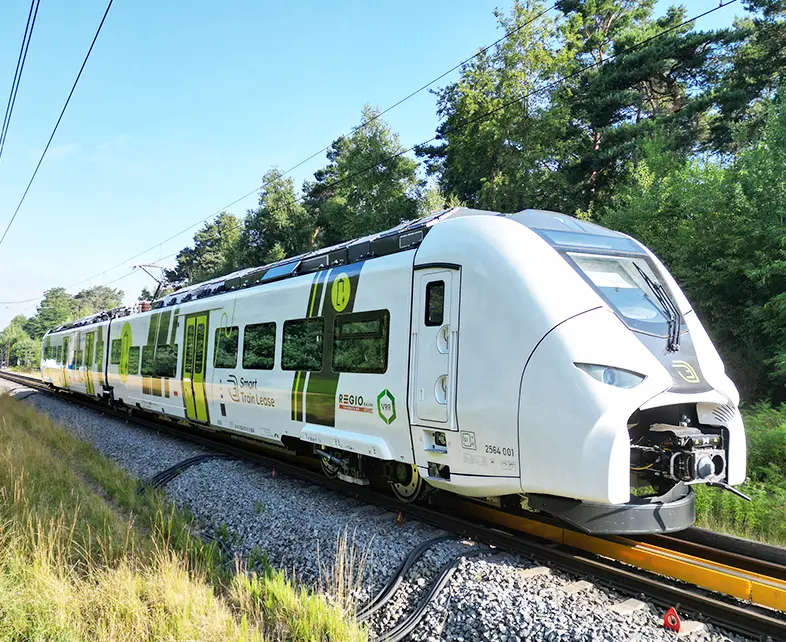
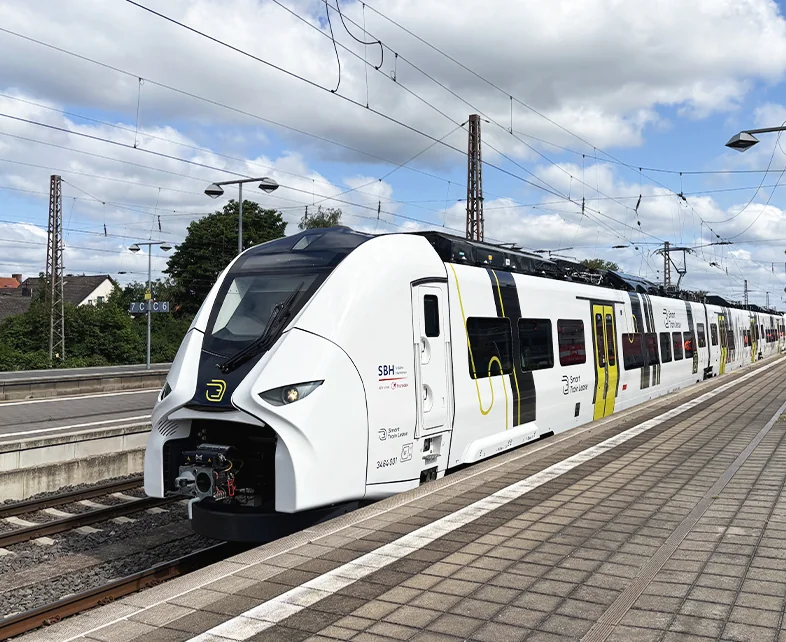
What were the reasons for the RMV and the HLB for the battery train operation on the Ländchesbahn?
V. Salzmann: The use of the battery train on the Ländchesbahn primarily serves to test a relatively new drive technology in real operation. RMV and HLB want to gain practical experience both in daily use and in the maintenance of such vehicles. In addition to the technical and operational findings, it is particularly important to both partners how these vehicles are accepted by our passengers and employees.
The Ländchesbahn was deliberately chosen as the test track, as a manageable section here is well suited for such a pilot operation. At the same time, the route offers a wide variety of users: These include early commuters, office workers, schoolchildren and passengers in leisure traffic. This allows the vehicles to be tested under different conditions.
What gap does the battery train close in the RMV network, or what gaps can battery trains close in the RMV network in the future — and why as a pilot on the Ländchesbahn between Wiesbaden Hbf and Niedernhausen?
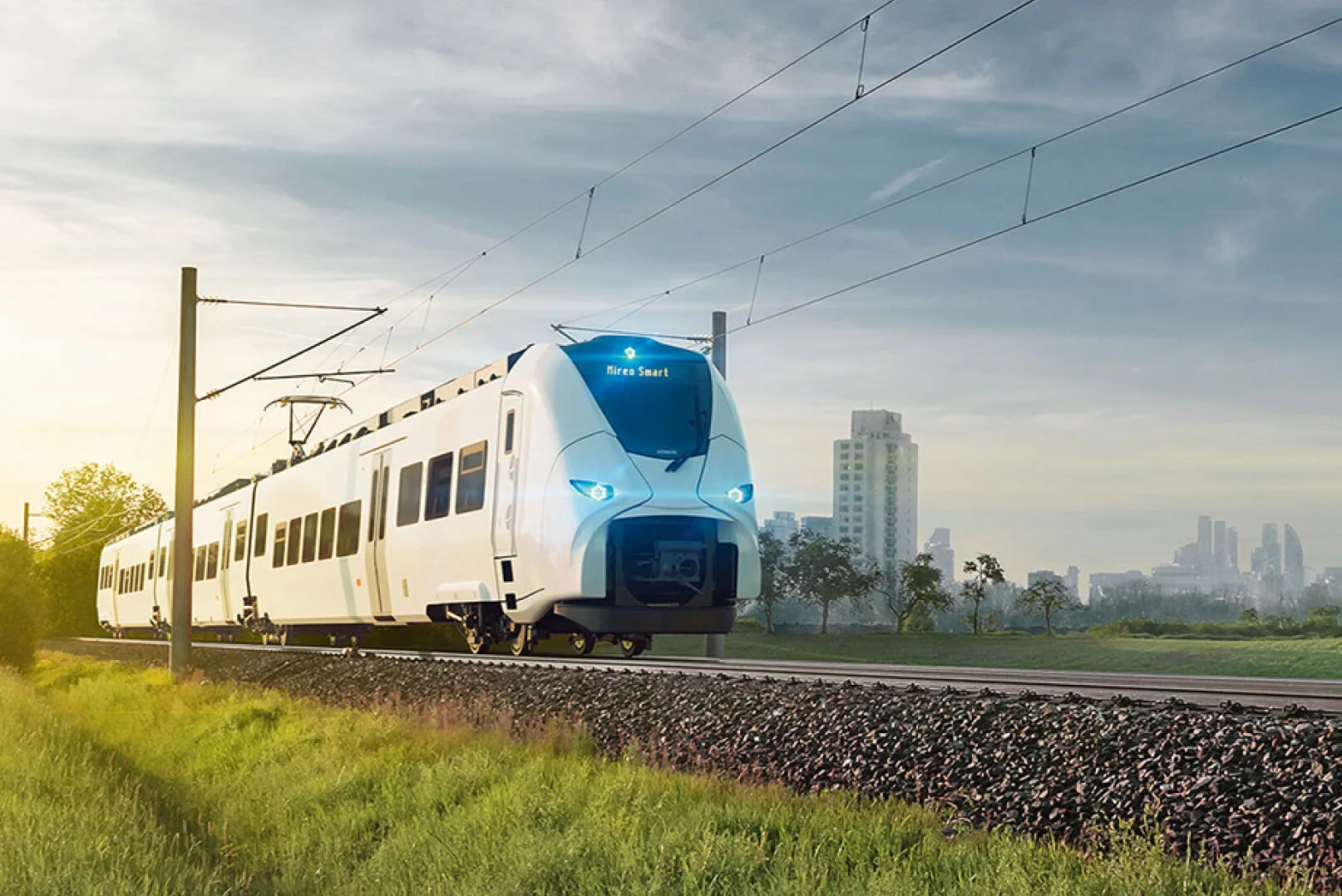
V. Salzmann: The experience that we are gaining together on the Ländchesbahn should be an important basis for decision-making as to which drive technologies HLB and RMV will use in new tenders in the future. In Hesse, there are several transport networks in which vehicles with diesel engines are still on the road today. These are particularly suitable for the use of battery trains (BEMU).
The test operation on the Ländchesbahn helps to gain realistic insights and thus create a reliable basis for decision-making. The data and experience gained will flow directly into the planning for the upcoming tenders in the 2030s and show us how we can move step by step from diesel drive to emission-free alternatives.